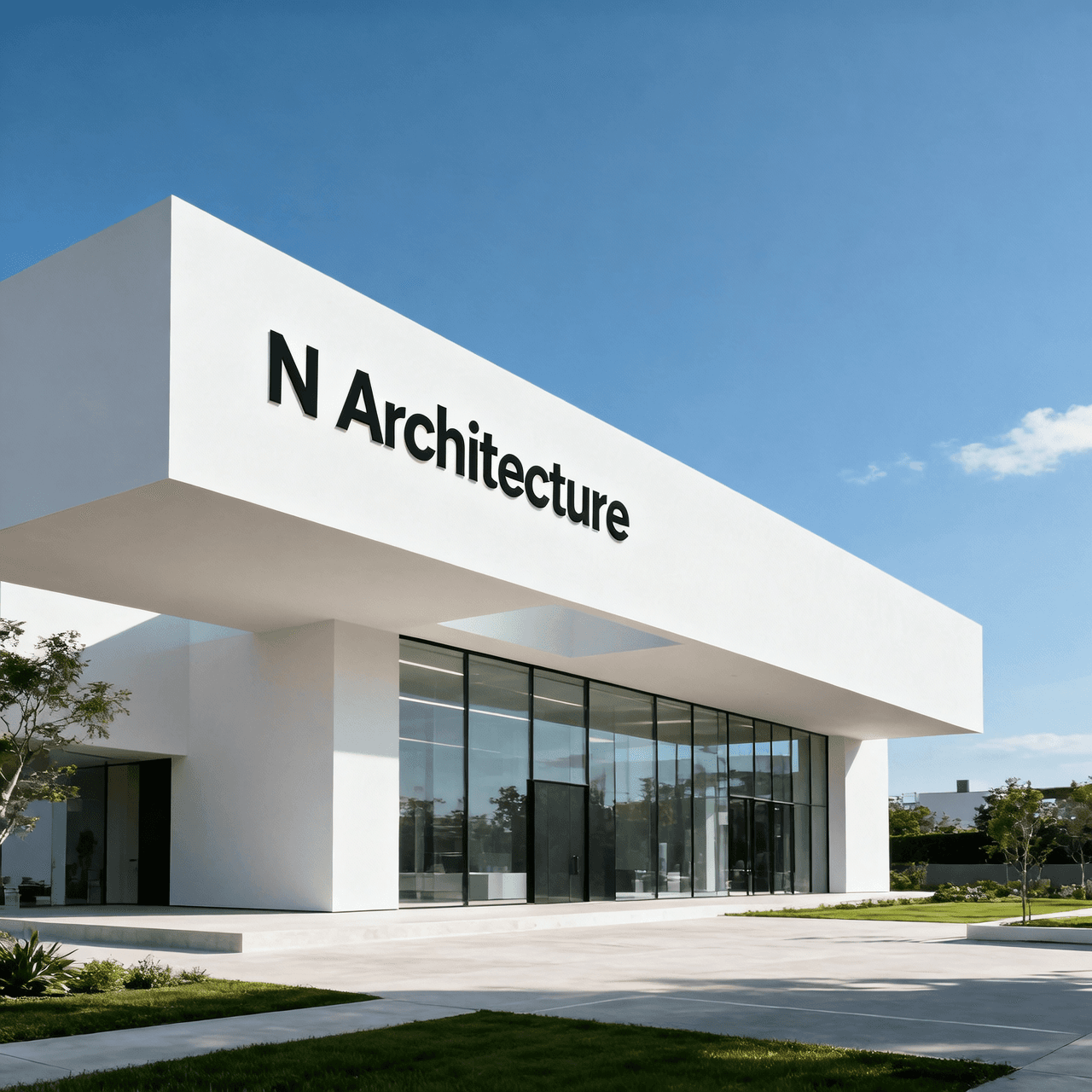
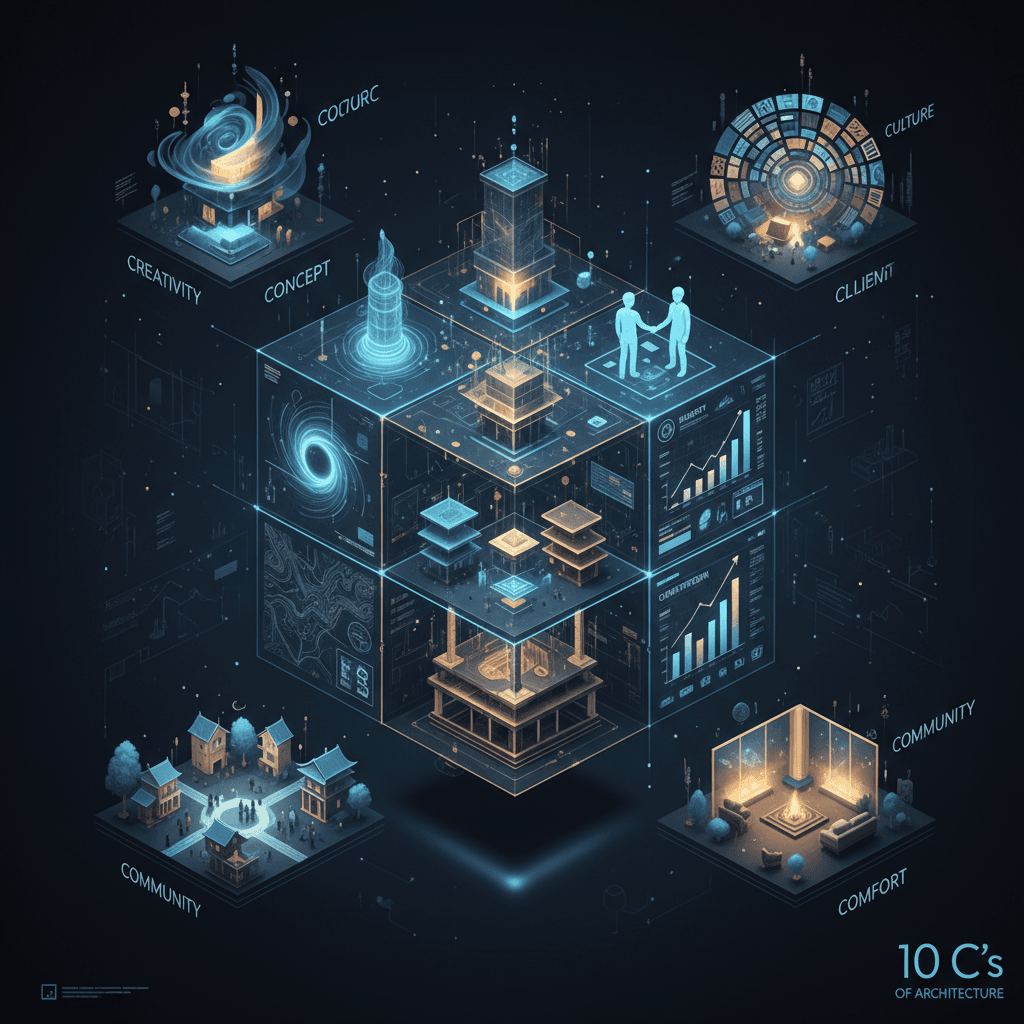

The Three C’s of Architecture are Commodity, Firmness, and Delight—first introduced by a Roman architect named Vitruvius. In today’s world, these ideas have expanded to include creativity, communication, coordination, and more.
Let me explain these in simple words and show how they still guide modern design and construction here in Bangladesh and beyond.
Why the Three C’s Matter in Architecture
As an architect working in today’s fast-changing world, I believe a good building should do three things well—it should work well, stand strong, and look beautiful.
These ideas aren’t new. In fact, they go back over 2,000 years to Vitruvius, a Roman architect who came up with three key principles for good design: Commodity, Firmness, and Delight, often called the original “Three C’s” of architecture.
Today, we use both classical and modern versions of these ideas in every project we handle at Archiconnect.
Classical Principles (Vitruvius’s Three C’s)
A Quick Overview
In his old book De Architectura, Vitruvius said every good building must have:
- Utility (Commodity) – Does it serve its purpose?
- Strength (Firmness) – Is it strong and safe?
- Beauty (Delight) – Does it look good and feel good?
Now let’s look at each one in detail.
Commodity (Functionality or ‘Utilitas’)
A building must be useful. That’s the first rule.
Does the design make sense? Are rooms placed where they should be? Is it easy to walk through? We focus on:
- Open, usable floor areas
- Comfortable layouts
- Easy movement from one space to another
For example, in homes we’ve designed in Dhaka, natural airflow and lighting save energy and make people feel better inside.
Firmness (Durability or ‘Firmitas’)
Buildings must last a long time. Good architecture should be safe, strong, and follow proper standards.
We make sure:
- Foundations are solid
- Structures meet safety codes
- Materials are strong and sourced wisely
In Bangladesh, where climate can be challenging, we design for floods, heat, and humidity—all while keeping quality in mind.
Delight (Aesthetics or ‘Venustas’)
People should feel happy and comfortable in the space.
Good design pleases the eyes and the mind. We care about:
- Facade beauty
- Balance in shapes and forms
- Mixing the right materials like glass, wood, or stone
At Archiconnect, we blend creativity and tradition to make something visually inspiring and suitable for the local culture.
Modern Design Interpretations of the Three C’s
While Vitruvius laid the foundation, modern projects demand more. Let's look at how we in today’s world—especially in projects here in Bangladesh—apply fresh versions of the Three C’s.
Creativity, Context, and Client
A great design should be unique. But it must also fit into the place it’s built and meet the needs of the client.
What we consider:
- Location: Weather, sun, wind, noise
- Culture: Local styles and habits
- Client needs: Budget, lifestyle, goals
Every project at Archiconnect starts with listening carefully to the client and studying the site deeply.
Communication, Coordination, and Collaboration
Designing a building is a team effort. Architects, engineers, workers, and the client must all stay in sync.
Good communication helps avoid mistakes. We do this with:
- Clear drawings
- Regular meetings
- Working side-by-side with all experts
In Bangladesh’s fast-paced construction environment, this approach saves time and money.
Clear, Concise, and Consistent (Documentation)
Construction drawings and plans must be easy to read and follow.
We make sure:
- Plans are not confusing
- Instructions are simple
- Everyone understands their job
This improves construction speed and reduces costly mistakes on-site.
Learn More: Why Architectural Documentation Matters
Conciseness, Continuity, and Compatibility (Design Flow)
Buildings should feel right from one space to the next. There should be a clear flow.
Things we focus on:
- Easy circulation
- Logical space planning
- Smooth connection to outdoor spaces or neighborhoods
This creates buildings where people feel relaxed and free to move.
Why the Three C’s Matter
Whether you follow the classic view or the modern version, one thing is clear: these principles help us make better buildings.
At Archiconnect, we use them to ensure that your building is:
- Functional
- Safe and strong
- Beautiful inside and out
- Built smoothly with strong teamwork
These principles help meet your goals and serve your lifestyle.
Conclusion
The Three C’s of architecture—Commodity, Firmness, and Delight—are timeless. We still follow them, while mixing in new ideas like creativity, communication, and context. When used correctly, these principles lead to successful, beautiful, and lasting buildings.
If you’re planning to design your dream home, mosque, resort, office, or any structure in Bangladesh, we’re here to help bring good architecture to life.
Learn More: How Long Should an Architect Take to Draw Up Plans
FAQs
What is 3C in architecture?
Answer: The “3C” in architecture stands for Commodity, Firmness, and Delight—meaning a building should be useful, strong, and beautiful.
Q: What is stage 3 in architecture?
Answer: Stage 3 is the design development phase—when the rough idea (concept) is turned into detailed plans, ready for engineering and approval. At Archiconnect, we make sure everything matches your vision before moving forward.
Q: What is 3-level architecture?
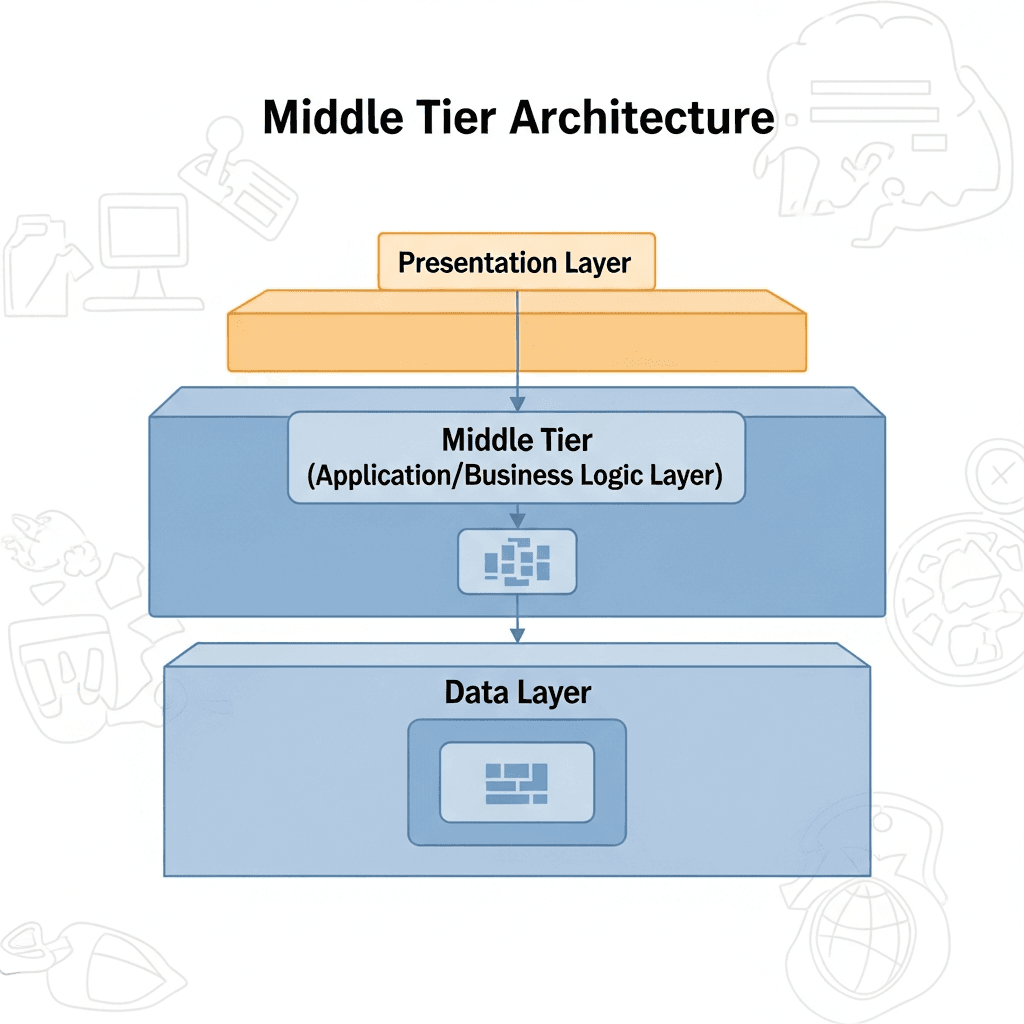
Answer: In software design, “3-level architecture” means three layers: presentation, logic, and data storage. But for buildings, it might mean three floors or tiers of structure/design, depending on the context.
Q: What are the three types of pillars in architecture?
Answer: In classical architecture, the three main types (orders) of pillars are:
- Doric – simple and strong
- Ionic – elegant with spirals
- Corinthian – fancy with flowers and leaves
We mix these styles with modern designs in today’s construction.