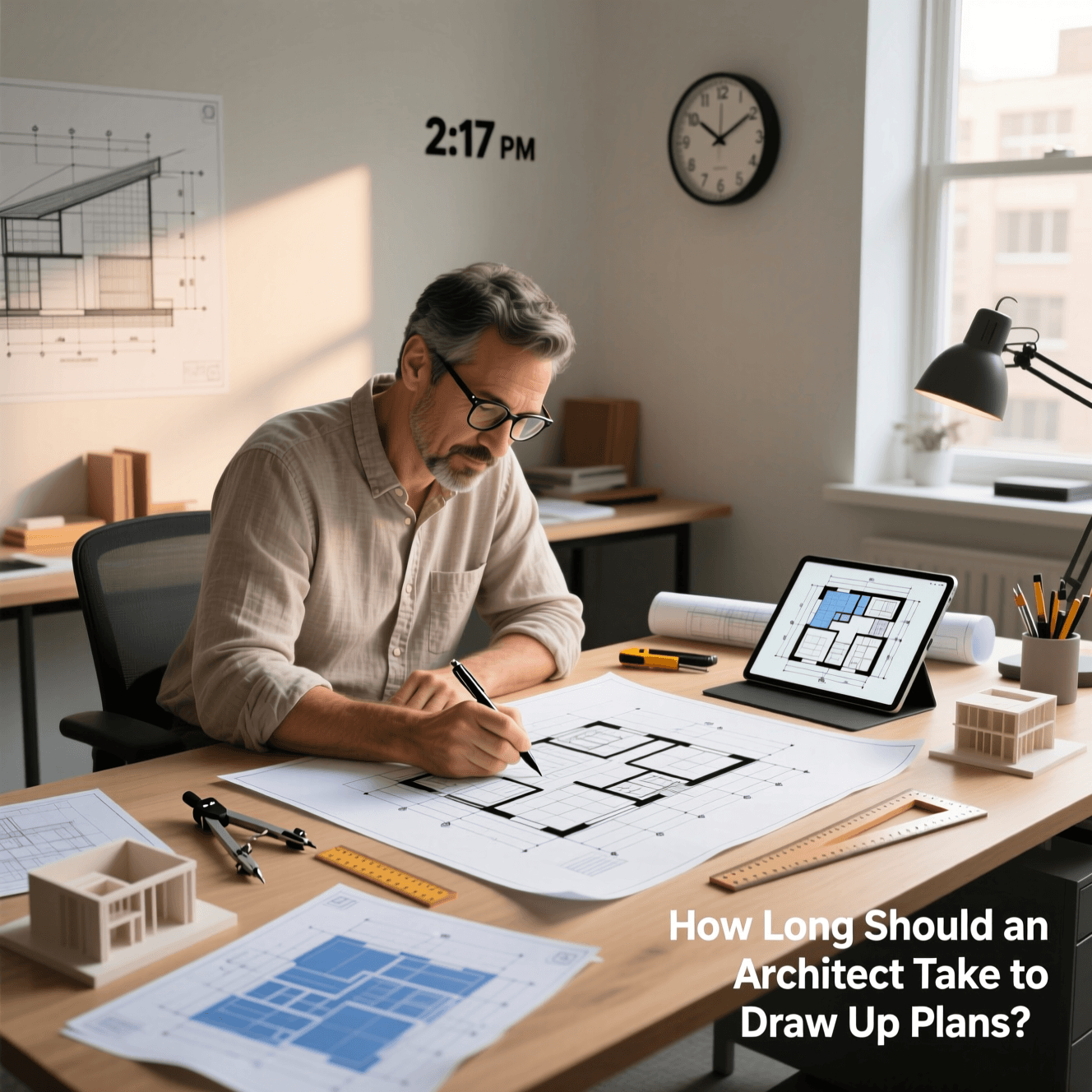

It depends on your project, but here’s a general idea:
- Small renovations or single-room extensions: 2–8 weeks
- Medium-size residential homes: 8–16 weeks
- Custom homes or complex buildings: 4–6 months (or more)
Now let’s dig a little deeper so you know what to expect — and how to avoid delays.
Why Some Plans Take Longer Than Others
Architectural plans can take a few weeks or several months, depending on the project. This is because a good plan needs more than just pretty drawings — it includes:
- Technical and structural details
- Coordination with engineers
- Local building regulations
- Your feedback and approvals
Getting high-quality plans upfront helps avoid costly mistakes, delays on site, and unexpected changes during construction.
Quick Breakdown of Timeframes
Here’s what you can typically expect:
-
Project Type: Small renovation / room extension
-
Estimated Time: 2–8 weeks
-
Project Type: Regular home (3–4 beds)
-
Estimated Time: 8–16 weeks
-
Project Type: Custom home / complex design
-
Estimated Time: 4–6 months
These timeframes include every stage, from early concepts to final drawings.
What Affects How Long Architectural Plans Take?
Let’s look at factors that can speed things up — or slow things down.
Size and Complexity
A simple single-storey home takes less time. But if your project has:
- Multiple floors
- Custom features
- Odd-shaped land or tight setbacks
Then planning takes longer because we need to be more detailed and careful.
Number of Revisions
We rarely get it right on the first try. Most clients change their minds — and that’s OK. But:
More changes = more time.
Late-stage changes affect every drawing and sometimes need rechecking with engineers.
Client Communication
If feedback takes a week every time, the timeline quickly doubles. You can help speed things up by:
- Responding fast
- Being clear about decisions
- Knowing what you want early on
Engineers and Consultants
We work with experts like:
- Structural engineers
- Electrical and plumbing consultants (MEP)
- Soil testers
- Surveyors
Their input is key. But their availability and approvals take time.
Learn More: Is an Architect an Engineer
Site Conditions & Permits
Planning a home on a tight, sloped, or restricted site? That may need special permits or extra drawings.
Permit rules can vary. City areas like Dhaka or Chattogram may have stricter codes than rural ones. This adds extra rounds of paperwork.
Architect’s Workload
In busy seasons — especially after monsoon — many people start building. Architects may have a queue of projects. Good firms will tell you upfront where you stand.
Stages of Designing Your Plan (With Timelines)
Here’s how a typical design unfolds — and how long each stage can take:
Stage 1: Pre-Design / Programming (1–3 weeks)
We begin by:
- Visiting your plot
- Measuring and doing site checks
- Understanding your goals, budget, and lifestyle
- Reviewing local laws and limitations
Stage 2: Schematic Design (4–8 weeks)
We sketch early ideas:
- Floor plan options
- Elevations (how the building looks)
- Where daylight, air, and views go
We’ll ask for your feedback before moving on.
Stage 3: Design Development (8–12 weeks)
We go into more detail:
- Materials
- Room sizes
- Structure and layouts
- Coordination with engineers
This is how we make sure the design works in real life — and not just on paper.
Stage 4: Construction Documents (8–12 weeks)
Here we produce the full final drawings — with technical details like:
- Foundations
- Plumbing and electrical
- Windows, doors, walls, finishes
- Schedules and specification tables
These drawings are what:
- Contractors use to build
- Municipalities use for approval
Learn More: Why Architectural Documentation Matters
Stage 5: Permits and Approvals (4–24+ weeks)
Some permit offices move quickly. Others may take months, especially in high-density areas, or if your design is outside the norm.
Authorities may ask for changes or extra documents. We help manage that process for you.
Why You Shouldn’t Rush the Plans
We understand everyone wants to start building fast. But here’s why you should give your architectural plan the time it deserves:
- Rushed plans lead to costly errors during construction
- Missing details might confuse the builder, leading to unsafe builds or wrong materials
- Contractors may price higher if drawings are unclear
Think of it like setting a strong foundation. A weak start leads to bigger problems later.
How You Can Help Speed Things Up
Here’s how you can make the whole process faster and smoother:
- Be clear and quick with your feedback
- Stick to the decisions you make
- Set your budget early
- Share documents like land papers, utility maps, or previous designs on Day 1
- Avoid making major changes halfway into the project
How We Manage Timelines at Archiconnect
At Archiconnect, we know your time and money matter. That’s why we:
- Give you a clear timeline upfront, based on your project
- Keep you informed at every stage
- Coordinate early with trusted engineers
- Use modern 3D tools (CAD, BIM) to reduce back-and-forth
- Deliver complete, accurate construction drawings — ready to build from
Whether it’s a small home or a full building, we treat every project with the same care.
FAQs
What’s the usual order for architectural drawings?
Drawings usually follow this sequence:
- Cover Sheet
- Site Plan
- Floor Plans
- Elevations
- Sections
- Construction Details
- Room & Material Schedules
Your builder needs all these to cost and build accurately.
How long does plan approval take?
That depends on your location. In some municipalities, approvals take:
- 4–6 weeks for simple homes
- 2–6+ months for complex/custom projects
Revisions requested by authorities can make this longer.
Does the architect’s experience affect how long it takes?
Yes — experienced architects:
- Make better early decisions
- Know what city offices look for
- Coordinate better with consultants
- Need fewer revisions
This can save weeks, or even months, in total!
Final Thoughts
Architectural plans are the blueprint of your dream. Rushing them can lead to real-world problems when it’s time to build.
A well-planned design means less stress, fewer site changes, and lower costs in the long run.
If you're planning to build, renovate a home, or develop a site in Bangladesh — big or small — feel free to contact us at Archiconnect. We’d be happy to create a custom plan and timeline based on your goals.
Let’s build it the right way — from the very beginning.