
At Archiconnect, we know that interior design is about more than making things look good. It's about solving problems in a space — making it both beautiful and functional.
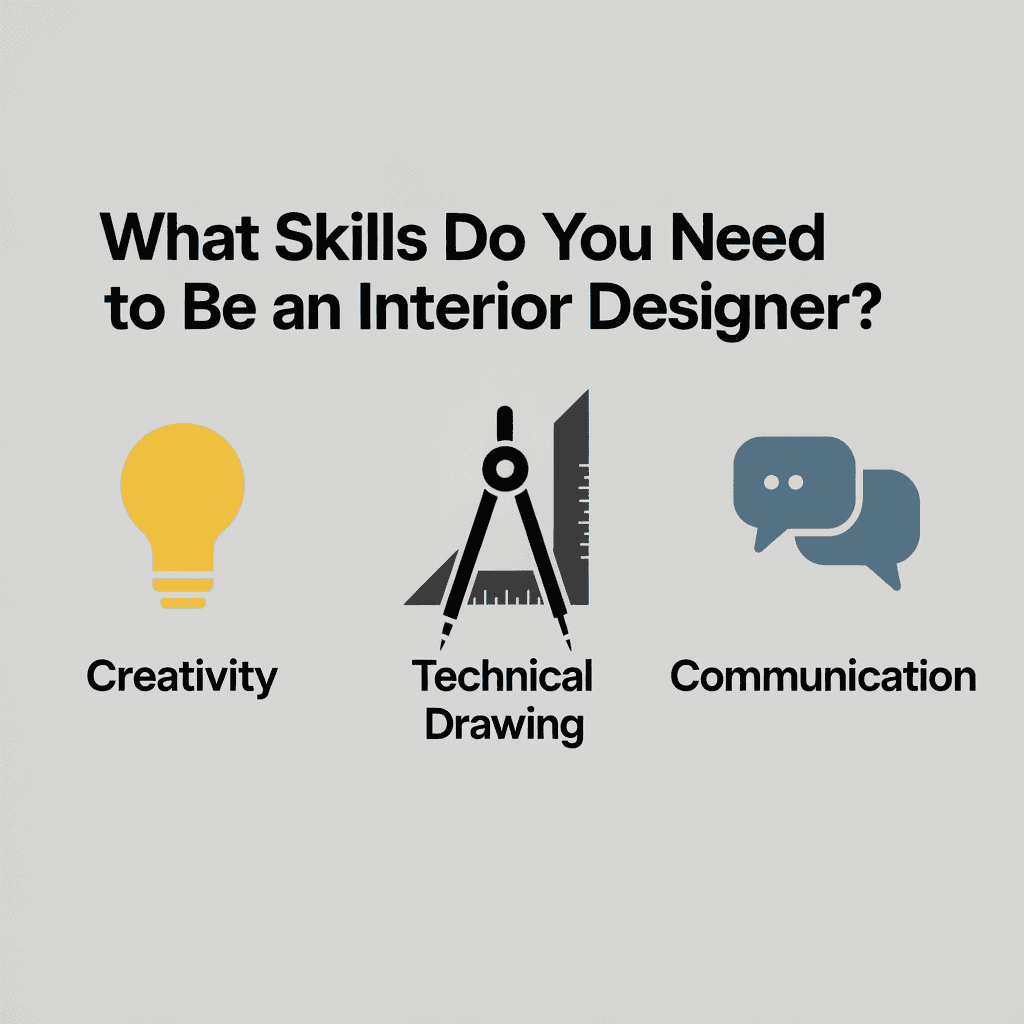
To do this well, an interior designer needs more than just creativity. We need to understand how buildings work, how people feel in a space, how to talk with clients, and how to manage budgets and timelines.
At Archiconnect, our team blends artistic vision with technical know-how to design spaces that not only look amazing but also work beautifully in real life. In this article, we’ll show you the main skills every interior designer needs, based on our real-world experience.
Core Skill Categories at a Glance
Here’s a quick list of the main skills needed in interior design:
- Creative and Visual Design Skills
- Technical and Spatial Skills
- Communication and Client Management Skills
- Business and Project Management Skills
- Adaptability and Continuous Learning
We’ll now go into detail for each one.
Learn More: What Major Would Interior Design Be Under
Creative and Visual Design Skills
Artistic Vision and Creativity
As a designer, I often start with a blank canvas. I imagine how the space could feel and function. Creativity helps me turn odd corners or small rooms into something smart and useful.
Example: One of our clients had a narrow living room. We used mirrors, flexible furniture, and lighting to turn it into a cozy family area and a mini home office.
Understanding of Design Principles
Design is not guesswork. We follow basic principles like balance, harmony, and proportion. These rules help make a space feel "just right," even if people can’t explain why. As professionals, we apply them from instinct and experience.
Color Theory and Material Harmony
Colors and textures affect mood and style. I use mood boards, color software like Canva, and design apps like Morpholio to explore ideas with clients. We plan carefully so that everything from the floor to the curtains works together.
Learn More: Is Interior Design Easy to Learn
Technical and Spatial Skills
Space Planning
In small apartments or large office buildings, every square foot matters. I plan layouts to make sure spaces flow well, feel open, and suit the people who will use them.
Drafting and Visualization
I create sketches, floor plans, and 3D visuals using tools like AutoCAD, SketchUp, and Revit. These help clients see the space before we build it. We also use 3D render tools like Lumion and V-Ray to bring ideas to life.
Building Codes and Structural Basics
We follow building laws in Bangladesh and globally — safety, fire exits, ventilation, accessibility, and more. These rules matter because we aren’t just creating pretty spaces — we’re creating safe, legal, and lasting environments.
Lighting Design
Lighting is more than brightness. I layer ambient, task, and accent lighting to create mood and serve real usage needs. We match lighting with paint colors, fabric textures, and natural sunlight.
Product and Material Knowledge
We stay up to date with the latest materials — from eco-friendly flooring to moisture-proof paints. These choices affect how the space performs over time.
Communication and Client Management Skills
Active Listening and Empathy
Before I design, I listen. Every client has a story and a dream. Understanding their lifestyle helps me create a design that’s truly theirs — not just something that looks good in photos.
Visual Communication
Mood boards, 3D renders, and presentations help me share my vision clearly. Clients often say, “I couldn’t picture it — until now.”
Collaboration
We work with many people — architects, electricians, carpenters, and vendors. Keeping everyone aligned takes patience, planning, and good teamwork.
Conflict Resolution
Sometimes plans change. Clients adjust their minds, or something doesn’t go as planned on-site. I solve problems fast and keep everyone moving forward with trust and honesty.
Business and Project Management Skills
Budgeting and Cost Control
A great design isn’t always about big spending. I often work within a budget, offering smart trade-offs. We’re honest with clients about what they can expect at different price points.
Time and Resource Management
Designing takes time — ordering materials, booking contractors, and installing elements. I create clear project timelines and keep track using Trello or MS Project for smooth execution.
Vendor and Contractor Coordination
We’ve built strong partnerships across Bangladesh, which helps us get fair pricing, quality products, and timely delivery. This shows our experience, integrity, and network strength.
Marketing and Branding Awareness
If my client owns a shop, restaurant, or office, I make sure the space reflects their brand style. A brand-aligned design can also boost business.
Soft Skills That Define a Great Interior Designer
Attention to Detail
Even the small things — like the shape of a cabinet handle or the direction of tile grout — matter in creating a polished space.
Adaptability
I keep learning. Whether it’s biophilic design, smart home tech, or new design software — staying current helps me serve clients better.
Problem-Solving Mindset
Every project comes with limits — budget, size, or construction. My job is to come up with creative solutions under those limits.
Emotional Intelligence
Design affects how people feel — peaceful or excited, productive or relaxed. Understanding emotions helps me design with heart, not just with hands.
Learn More: How to be an Interior Designer in Bangladesh
Technical Skills Every Modern Interior Designer Should Master
Here’s a quick reference list of tools we use daily:
- AutoCAD, Revit, SketchUp – for plans and 3D layouts
- Lumion, V-Ray – 3D renders and walkthroughs
- Adobe Photoshop, Illustrator, InDesign – for visuals
- Canva, Morpholio – mood boards, idea sharing
- Roomstyler, Planner 5D – quick design mockups
- Trello, Asana, MS Project – for timelines and task management
How We Apply These Skills at Archiconnect
At Archiconnect, we turn your ideas into reality by using a step-by-step, professional method. Our team blends creativity, accuracy, and solid communication every step of the way.
Here’s what our process looks like:
- Concept & Visualization — We listen and sketch your ideas
- 3D Design & Technical Drafting — We build detailed plans
- Budgeting & Project Coordination — We manage the crew, cost, and timeline
Everything we do is centered around your lifestyle, your needs, and your taste.
Tips for Aspiring Interior Designers
If you want to be an interior designer, here are my tips:
- Start small — redesign your own room -** Build a strong portfolio —** take before-and-after photos
- Learn tools — SketchUp and Canva early
- Stay curious — visit design shows, read blogs, follow top designers
- Practice listening — understand what people really need
Interior design is a mix of art, science, and service. You’ll get better with each project.
Learn More: How Interior Design Works
Frequently Asked Questions
What are the top 5 skills of an interior designer?
Creativity, communication, technical skills, problem-solving, time management.
What technical skills are important for interior design?
Tools like AutoCAD, 3D rendering, space planning, lighting design knowledge.
Do interior designers need to know math?
Yes, basic math helps with measurements, area planning, and budgeting.
What soft skills help you succeed in interior design?
Empathy, attention to detail, adaptability, teamwork, Emotional Intelligence.
How can I learn interior design skills online?
Start with free YouTube tutorials or take beginner courses on platforms like Coursera, Udemy, or LinkedIn Learning.
What are the key skills needed as an interior designer?
Design sense, software knowledge, building codes, client handling, and project control.
What are the 7 basics of interior design?
Space, line, form, light, color, texture, pattern.
Is interior design a hard skill?
Yes and no. Tools, codes, and drafting are hard skills. Communication and creativity are soft skills.
What are the soft skills for interior design?
Listening, flexibility, leadership, problem-solving, and storytelling.
Conclusion: The Blend of Art, Science, and Strategy
Being an interior designer is not just about picking a nice paint color. It’s about using design, technology, and communication to turn an ordinary space into something meaningful and lasting.