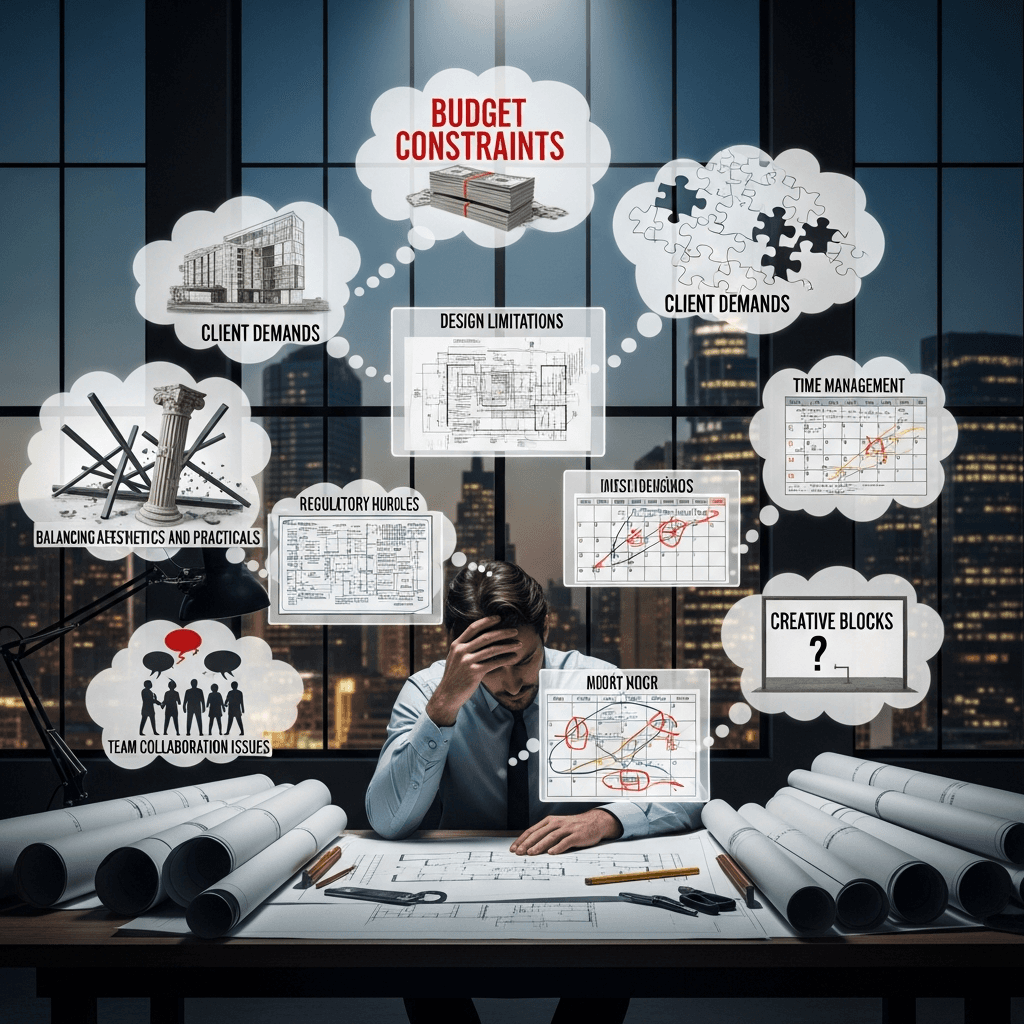

Being an architect is exciting and creative, but it’s also full of real-world problems. We don’t just sketch buildings—we solve serious design and construction challenges while keeping everything safe, legal, and within budget.
Many people don’t see what goes on behind the scenes. Understanding what we struggle with helps you, as a client, know why hiring a skilled architect matters—and how much work we really do to make your dream home or building a success.
Financial and Business Pressures
High Cost of Education and Low Starting Pay
To become an architect, we go through 5–7 years of university in Bangladesh and often take more training afterwards. That’s expensive. Even after all that education, early in our careers, our salaries are lower than other professionals like engineers or doctors.
Running a Firm Isn’t Easy
For those of us who start our own firms, money problems don’t go away. We have to find steady work, compete with others offering low prices, and keep the business running even during tough times like economic downturns. Budgeting and managing cash flow are constant struggles.
Long Hours, Tight Deadlines, and Burnout
Work Spikes
Some phases of a project—like the design stage, making approval drawings, or coordinating with contractors—demand crazy hours. Often, we work late nights just to meet client deadlines or city permits.
Burnout is Real
Many architects feel exhausted. Working long hours with few breaks affects our health and even our creativity. When we're worn out, it's harder to make smart, creative decisions.
4. Client Challenges
4.1 Unrealistic Expectations
Many clients want “luxury on a small budget.” They also think architects just draw pretty pictures. In reality, we manage every detail—from foundation to finish—with precision and planning.
Last-Minute Changes
Clients often change their minds late in the project. Every change affects time, cost, and approvals. Even small feedback delays can push delivery dates far ahead.
Hard Concepts to Explain
It’s not easy to explain building codes or technical trade-offs with materials. A big part of our job is helping clients understand complex ideas in simple words.
Dealing With Codes and Permits
Codes Keep Changing
In Bangladesh, building codes keep updating. Fire safety, accessibility, HVAC rules—all of it matters. As architects, we must stay updated or risk project rejection.
Permits Take Time
Getting building approval can take months, depending on where you build. A simple error in paperwork can lead to big delays.
Balancing Creativity and Real Limits
Budget and Cost Challenges
It’s hard to design your dream space when money is tight. We often adjust our ideas to fit the client’s budget and changing material prices.
Engineering and Site Changes
Even the best designs might need changes during construction. Sometimes structures are not possible, or the site has hidden problems. We always need to adapt.
Limited Creative Freedom
Clients and contractors often want changes that reduce our control over how things look or function. We lose some of the creative freedom we start with.
Technology Tools Are Always Changing
Constant Learning: BIM, CAD, and More
Architecture software like AutoCAD and BIM evolves fast. We have to keep learning and pay for licenses, upgrades, and new tools. It’s expensive and time-consuming.
Collaborating Digitally
We often work with many professionals using shared files and cloud platforms. Managing versions, updates, and feedback online is a headache if not done properly.
Industry-Wide Problems
Supply Chain Delays
Sometimes, materials aren’t available or shipments get delayed. This affects the entire construction timeline—something we can’t control.
Incomplete Product Info
Many material suppliers don’t give us accurate technical data. This makes it harder to choose the right products or get approvals.
Team Confusion
Coordination among engineers, contractors, and team members is not always smooth. Poor communication causes rework and frustration.
Young Architects Face Many Challenges
Long Study Hours
Architecture students spend long hours on design projects, models, and late-night critiques. It’s demanding and tiring.
High Competition
To get a job or internship, your portfolio must stand out. This creates pressure to do more—even when students are already overwhelmed.
Career Confusion
Young architects often feel unsure about whether to work in residential, commercial, interior, or landscape design. It takes time to find the right path.
Social and Global Pressures in Architecture
Sustainability is a Must
Clients want eco-friendly buildings. We now have to design to reduce carbon footprints, follow green guidelines, and stay cost-effective.
Urban Crowding
In cities like Dhaka, space is limited, but demand is high. We must design creative solutions for housing in tight spaces.
Inclusive Design
Laws now require buildings to be accessible to everyone—including people with physical challenges. This adds complexity to design.
Is There a Shortage of Architects Today?
Yes, in many places, there are fewer skilled architects than needed—especially those who understand green design, advanced tech, and local codes. In Bangladesh, demand is growing fast, especially for sustainable and smart buildings.
What These Struggles Mean for Our Clients
Why Experience Matters
Skilled architects solve real problems—design, construction, budgeting, and legal permits. We save you time, money, and stress.
We Help Avoid Mistakes
Small design errors can lead to big rebuilds later. A good architect plans carefully, coordinates well, and avoids those expensive surprises.
We Design for Long-Term Safety
Our job ensures your space is safe, usable, and cost-effective for years—not just on Day 1.
How We at Archiconnect Solve These for You
At Archiconnect, we’ve built a platform that connects you with professional, local architects in Bangladesh—people who know local codes, handle stress, and can guide you with ease.
We help manage:
- Site coordination
- Client discussions
- Drawing and coding approvals
- Construction supervision
- Budget control
We also provide clear explanations for every design decision—so you’re never left confused.
Conclusion
Architects face many hidden struggles—from tight deadlines and budget limitations to code regulations and burnout. But these struggles also show how much value a good architect brings to any project.
Need help with your dream home or building design in Bangladesh?
Reach out to the team at Archiconnect. We’ll guide you from concept to completion.
FAQs
Q: What are the struggles of an architect?
Architects face long hours, tight budgets, changing client demands, and tough legal codes. It’s a mix of creative design and real-world problem-solving.
Q: What is the biggest problem in architecture?
Balancing client dreams with budget and legal rules is often the hardest part.
Q: What are the weaknesses of an architect?
Time pressure, burnout, and limited creative freedom are common issues. Also, dealing with slow client feedback adds delays.
Q: What age do most architects retire?
Most architects work into their late 60s or even early 70s, especially if they run their own firm or consult.